Mar
27
2026
Understanding Federal Grand Jury Subpoenas in Criminal Investigations
Receiving a federal grand jury subpoena means a federal investigation has reached you directly. Whether you are classified as a witness, subject, or target, and how you respond in the next few days, can shape the trajectory of your entire case. Understanding federal grand jury subpoenas in Texas Federal criminal investigations is not optional once that document arrives. Robert J. Fickman Criminal Defense has handled over 300 federal cases and represents individuals facing serious federal allegations in Houston and throughout Texas. Contact Robert Fickman Criminal Defense today for a consultation.
Types of Federal Grand Jury Subpoenas
Federal grand juries issue two types of subpoenas, both carrying the full force of federal law. Ignoring either can result in contempt, fines, and incarceration until compliance.
- Subpoena Ad Testificandum: Compels you to appear before the grand jury and answer questions under oath
- Subpoena Duces Tecum: Compels production of documents, electronic records, or other tangible evidence
- Combined Subpoenas: Some demands require both testimony and document production simultaneously
The scope of what the Federal government can demand is broad, which is why seeking experienced legal counsel before responding is essential.
How Federal Grand Jury Proceedings Work
Federal Grand jury proceedings are governed by Fed. R. Crim. P. 6(e) and are conducted in secret. No judge is present during testimony. The Federal prosecutor, Assistant United States Attorney, controls questioning and decides which witnesses to call. The prosecutor uses the Grand Jury to gather evidence and to seek criminal charges against people.
A grand jury consists of 16 to 23 jurors and requires at least 12 to vote yes to indict or charge you with a Federal crime. That is a low bar, and it is one reason why nearly every case a prosecutor brings to a grand jury results in an indictment. Grand juries can sit for up to 18 months, and witnesses testify without their attorneys present. Cases involving wire fraud, drug trafficking, and SBA/PPP fraud frequently proceed through the grand jury process.
Target, Subject, or Witness: Why Your Classification Matters
The Department of Justice classifies individuals in grand jury investigations into three categories. A target has substantial evidence linking them to criminal conduct. A subject’s conduct falls within the scope of the investigation but has not been specifically identified as criminal. A witness has relevant information but is not suspected of wrongdoing. Your classification affects your rights, your risks, and the strategy your criminal defense attorney should pursue. These classifications are not static. A witness today can become a subject or target as the investigation develops, sometimes during the very testimony they provide.
Constitutional Rights You Retain Before a Grand Jury
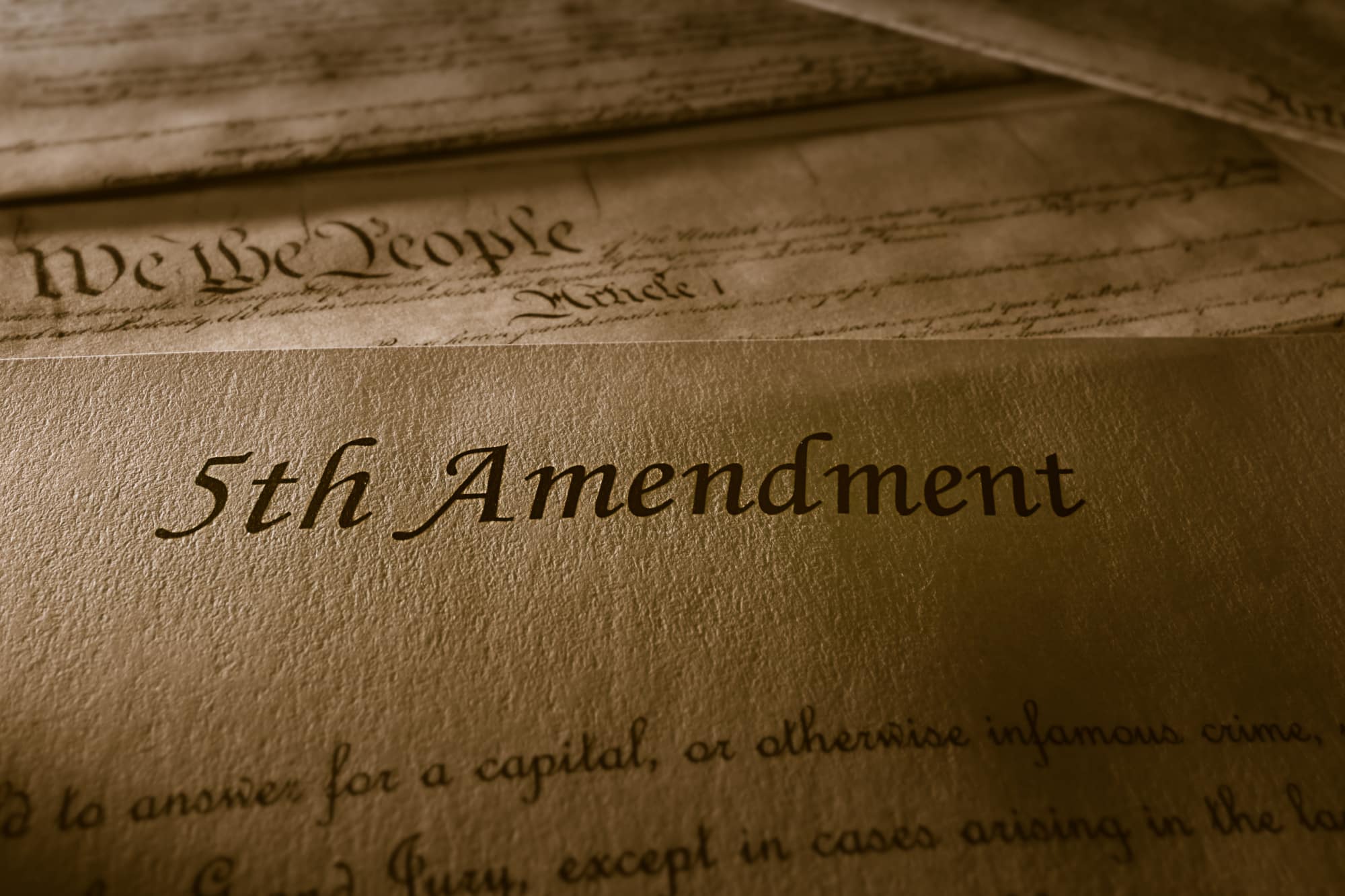
The Fifth Amendment provides you with a privilege against self-incrimination. In order to protect yourself from potential self-incrimination, you have the right to invoke your Fifth Amendment privilege on a question-by-question basis. Additionally, you do not have to explain why you are invoking your Fifth Amendment as to a particular question. Simply put, explaining why you are invoking your Fifth Amendment might be incriminating. You have the right to consult with your federal criminal defense lawyer outside the grand jury room, though your attorney cannot be present inside during testimony. Overbroad or unreasonable subpoenas can be challenged through a motion to quash.
Attorney-client privilege and work product protections apply to documents and communications with your defense attorney. Understanding these rights before you testify is critical to avoiding unintended self-incrimination.
Mistakes That Make Federal Exposure Worse
The period after receiving a subpoena is when the most damaging mistakes happen. Avoid these common errors, which may constitute a Federal law violation:
- Destroying or altering documents (obstruction under 18 U.S.C. § 1519, up to 20 years)
- Discussing your subpoena or anticipated testimony with co-targets
- Making false statements to federal investigators (18 U.S.C. § 1001)
- Ignoring the subpoena entirely, leading to contempt proceedings
- Volunteering information beyond what is specifically asked
Each of these actions can create new criminal exposure entirely independent of the original investigation. Houston Federal criminal defense attorney Robert Fickman can help you avoid these pitfalls from the moment you receive the subpoena.

What Federal Criminal Defense Attorney Robert Fickman Does Before You Testify
Federal Criminal Defense Attorney Robert Fickman begins by assessing your actual exposure level. This means reviewing the subpoena’s scope, determining what the government likely knows, and identifying your realistic classification. Robert Fickman will contact the prosecutor and ask him to identify your classification. He frequently discusses the document production with the prosecutor. In these conversations, Robert Fickman may get the Government to agree to reduce its overbroad document requests. He may also obtain an agreed rescheduling of the document production if more time is needed to comply.
In many cases, after deciding that you will invoke your Fifth Amendment privilege against self-incrimination, Robert Fickman will notify the prosecutor that you will be invoking your Fifth Amendment privilege. Once the prosecutor knows you are going to invoke your Fifth Amendment privilege, they may agree to withdraw their subpoena. If you are going to testify, Robert Fickman will thoroughly prepare you before you ever set foot in the grand jury room. Testimony that you give before the grand jury is under oath, so whatever you say must be truthful. If the truth is incriminating than it makes sense to invoke the Fifth Amendment. If you do invoke your Fifth Amendment privilege and you are charged with a crime, your invocation of your Fifth Amendment cannot be considered as incriminating evidence in any future criminal trial.
Asking the Government for immunity is another possibility. As a general rule, the Government is very reluctant to obtain immunity for any witness. There are two kinds of immunity. “ Use immunity” means the government cannot use your own testimony directly against you, but can still prosecute you using other evidence. “Transactional immunity” is stronger, meaning you cannot be prosecuted at all for the conduct you testify about.
Retain Houston Federal Criminal Defense Lawyer Robert Fickman to protect you when you receive a Federal Grand Jury Subpoena. Robert Fickman will use his 40-plus years of experience to assist you in making the right decisions when responding to a Federal Grand Jury Subpoena.
Understanding federal grand jury subpoenas in Texas criminal investigations requires a Houston criminal defense lawyer who has been through the process for decades. Robert J. Fickman Criminal Defense has spent over four decades defending Texans in federal court. Contact us online for a free case evaluation.
Related