












If federal agents have contacted you about a computer case, the investigation has likely been running for some time. These matters often arrive with digital evidence, records, subpoenas, interviews, server logs, account histories, and a theory of unauthorized access already …
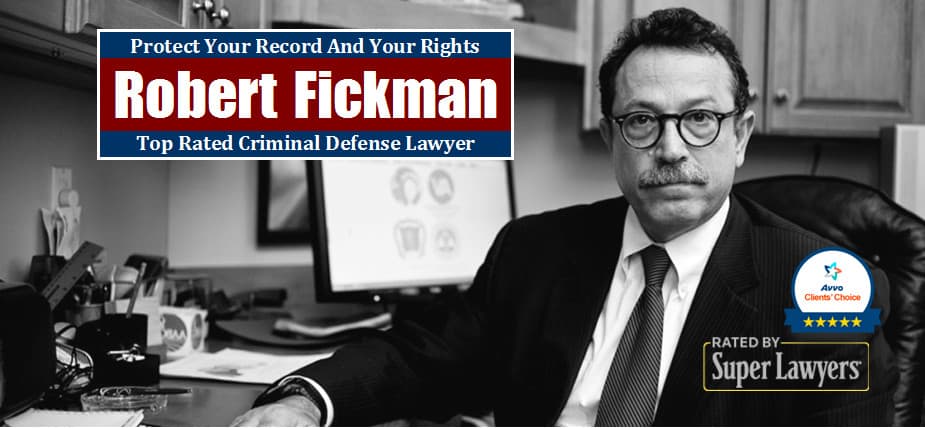
Houston Aggravated Identity Theft Defense Lawyer
In the past 42+ years, I have defended people charged with every kind of fraud allegation, including PPP, wire, mail, telemarketing, mortgage, bank, credit card, health care, Medicare, hospice care, and insurance fraud.
The Federal Government is now actively investigating and filing serious Federal Criminal Charges against individuals who are alleged to have committed the offense of Aggravated Identity Theft. If someone is charged with a related fraud offense, the Government, at times, will threaten to add an additional charge of Aggravated Identity Theft to strengthen its case. A conviction for Aggravated Identity Theft adds two years to any sentence for an underlying fraud offense.
What is the crime of Aggravated Identity Theft
Title 18, United States Code, Section 1028A(a)(l), makes it a crime for anyone to knowingly transfer, possess, use without lawful authority, a means of identification of another person during and in relation to a felony offense enumerated in § 1028A(c). Restated, it is a Federal felony to knowingly use without lawful authority the identification of another person when done so in relation to certain other Federal offenses.
What are the other Federal Offenses that one must be committing for the use of another’s identification to constitute Aggravated Identity Theft
- section 641 (relating to theft of public money, property, or rewards [1]), section 656 (relating to theft, embezzlement, or misapplication by bank officer or employee), or section 664 (relating to theft from employee benefit plans);
- section 911 (relating to false personation of citizenship);
- section 922(a)(6) (relating to false statements in connection with the acquisition of a firearm);
- any provision contained in this chapter (relating to fraud and false statements), other than this section or section 1028(a)(7);
- any provision contained in chapter 63 (relating to mail, bank, and wire fraud);
- any provision contained in chapter 69 (relating to nationality and citizenship);
- any provision contained in chapter 75 (relating to passports and visas);
- section 523 of the Gramm-Leach-Bliley Act (15 U.S.C. 6823) (relating to obtaining customer information by false pretenses);
- section 243 or 266 of the Immigration and Nationality Act (8 U.S.C. 1253 and 1306) (relating to willfully failing to leave the United States after deportation and creating a counterfeit alien registration card);
- any provision contained in chapter 8 of title II of the Immigration and Nationality Act (8 U.S.C. 1321 et seq.) (relating to various immigration offenses); or
- section 208, 811, 1107(b), 1128B(a), or 1632 of the Social Security Act (42 U.S.C. 408, 1011, 1307(b), 1320a–7b(a), and 1383a) (relating to false statements relating to programs under the Act
What must the Government prove for someone to be found guilty of Aggravated Identity Theft
First: That the defendant knowingly transferred, possessed, or used a means of identification of another person;
Second: That the defendant did so without lawful authority;
Third: That the defendant transferred, possessed, or used the means of identification of another person during and in relation to one of the other Federal offenses enumerated in § 1028A(c); and
Fourth: That the defendant knew that the means of identification in fact belonged to another real person, living or dead.
For example, if the defendant knowingly used another person’s means of identification without lawful authority during and in relation to the offense of theft of public money, they could be guilty of Aggravated Identity Theft.
What does “Means of identification” mean
It means any name or number that may be used, alone or in conjunction with any other information, to identify a specific individual, including any name, social security number, date of birth, official State or government-issued driver’s license or identification number, alien registration number, government passport number, or employer or taxpayer identification number. Restated, something as simple as another person’s name or driver’s license could be used to commit Aggravated Identity Theft.
What does “Without lawful authority” mean
It means that the defendant transferred, possessed, or used another’s means of identification either without that person’s permission, beyond the scope of that person’s legally obtained permission, or having obtained that person’s permission illegally.
There Must be an Intent to Defraud of Deceive
Identity theft is committed when a defendant uses the means of identification in a manner to defraud or deceive. It is not enough that the use of a means of identification was helpful or even necessary to accomplish the charged conduct, unless the accused used that means of identification to deceive about the identity of the person performing the actions or receiving the benefits or services.
What is the Punishment for Aggravated Identity Theft—
Whoever commits the offense of Aggravated Identity Theft during or in relation to any felony violation enumerated in subsection (c) shall, in addition to the punishment provided for the other alleged felony, be sentenced to a term of imprisonment of 2 years.
A court shall not place on probation any person convicted of a violation of this section. While there are some exceptions, generally, a conviction for Aggravated Identity Theft will result in a consecutive two-year sentence stacked on top of any other sentence the accused may receive.
The Government May Incorrectly Charge an Innocent Person with Aggravated Identity Theft.
In fraud and other white-collar cases, including federal investigations into Aggravated Identity Theft, the government casts a wide net and sometimes catches the wrong fish. You may be caught up in a net you do not belong in.
As your lawyer, my job is to fight the Federal Government. It is my job to investigate and evaluate the Government’s evidence. It is my job to find flaws in the Government’s case. It is my job to investigate the credibility of Government witnesses. It is my job to try to prove that Government witnesses are either mistaken or lying in any assertion that you are guilty.
As your lawyer, it is also my job to work hard to develop the strongest possible defense. Developing a strong defense takes many hours and a strong commitment toward victory. Building a strong, winning defense is complicated, and it cannot easily be summarized on a website. I have defended the accused for 42 years. My experience has taught me that hard work and preparation are the ultimate keys to victory
In Aggravated Identity Theft, I may be able to use certain defenses. For instance, if you had another’s means of identification as part of your employment but you had no intent to defraud or deceive, you would not be guilty of the offense.
In many fraud cases, people get involved in what appears to be a legitimate business. It is not unusual in legitimate businesses for the business to have a list of names or some other identifier. If the business is not engaged in unlawful activity, it is not Aggravated Identity Theft for the business to have the list of names. A business could have a list of prospects it contacted to see whether they were interested in hiring the business to provide a lawful service. It is not Aggravated Identity Theft to have a list of names or other contact information for a lawful purpose.
If you are involved with a legitimate company and someone else at the company is engaging in Aggravated Identity Theft, and you have nothing to do with it, you have not committed Aggravated Identity Theft. In a company, if someone else is breaking the law, you are not responsible for their unlawful conduct as long as you are not involved in it. In a company with hundreds or thousands of employees, a rogue employee may be violating the law by engaging in fraudulent conduct, including Aggravated Identity Theft. Even though the rogue employee may be breaking the law, the rest of the company, unaware and not participating in the rogue employee’s illegal actions, would not be guilty of those actions. name or some other identifier, only to find out later that someone else involved was doing something illegal.
Likewise, you may be an honest investor who invests in a business with the honest belief that the business is engaged in lawful activity. If you invest in a company and someone at the company is involved in fraud or Aggravated Identity Theft, as an unknowing investor, you would not be responsible for the illegal actions of an employee.
If you are under investigation or charged with Aggravated Identity Theft, call Aggravated Identity Theft Defense Lawyer Robert Fickman today to protect your liberty and your rights. Call 713-655-7400 today.
A SUMMARY OF CRIMINAL DEFENSE ATTORNEY ROBERT FICKMAN’S CREDENTIALS
- Robert Fickman has been a criminal defense attorney in Houston for 42 Years.
- Robert Fickman has handled over 300 Federal Criminal Cases.
- Robert Fickman has successfully kept some clients who were under federal investigation from being charged in Federal Court.
- Robert Fickman has obtained the dismissal of Federal Charges against some clients
- Robert Fickman has gone to trial in Federal Court and obtained acquittals on all charges for some clients.
- In 2022, Robert Fickman went to trial in United States v. Rebolledo. There were 56 Defendants indicted in the Rebolledo case. Robert Fickman’s client was the ONLY client in the entire case to be acquitted on all charges. His client had seven charges. Robert Fickman convinced the trial judge to throw out four of the charges before the charges even got to the jury. Robert Fickman convinced the trial jury to find his client NOT GUILTY on the remaining three charges.
- Robert Fickman has argued many cases before the Fifth Circuit Court of Appeals.
- Robert Fickman has had an AV Rating (the highest rating) from Martindale-Hubbell for over 20 years.
- Robert Fickman has been named a “Texas Super Lawyer” since 2015.
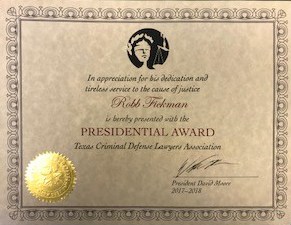
- Robert Fickman is well-respected by his peers, and he has received numerous awards.
- Robert Fickman was the President of the Harris County Criminal Lawyers Association (HCCLA) from 2006-2007.
- Robert Fickman is a past board member of the Texas Criminal Defense Lawyers Association (TCDLA).
- Robert Fickman serves on the TCDLA Judicial Conduct Committee.
- Robert Fickman serves on the HCCLA and TCDLA Strike Forces, where he is called upon to come to the aid of other criminal defense lawyers.
- Robert Fickman is an outstanding national public speaker. Robert Fickman was on the National Association of Criminal Defense Lawyers’ “Best of 2010 Speakers”, “Best of 2014 Speakers,” and “Best of 2022 Speakers Disc.”
- Robert Fickman was named “Mr. Declaration of Independence” in the Texas State Bar Journal for his volunteerism.
- Robert Fickman has dedicated his entire professional career to defending those accused of criminal offenses. He was never a prosecutor and never wanted to be a prosecutor.
- Robert Fickman has been a criminal defense attorney in Houston for 42 Years.
- Robert Fickman has handled over 300 Federal Criminal Cases.
- Robert Fickman has successfully kept some clients who were under federal investigation from being charged in Federal Court.
- Robert Fickman has obtained the dismissal of Federal Charges against some clients
- Robert Fickman has gone to trial in Federal Court and obtained acquittals on all charges for some clients.
- In 2022, the Government was prosecuting a large alleged drug conspiracy. The Government named their case “ Operation Wrecking Ball.” There were 56 defendants indicted in this case. Robert Fickman was defending one of defendants. Robert Fickman went to trial in his case, United States v. Rebolledo. Robert Fickman’s client was the ONLY client in the entire case to be acquitted on all charges. His client had seven charges. Robert Fickman convinced the trial judge to throw out four of the charges before the charges even got to the jury. Robert Fickman convinced the trial jury to find his client NOT GUILTY on the remaining three charges.
- Robert Fickman has argued many cases before the Fifth Circuit Court of Appeals.
- Robert Fickman has had an AV Rating (the highest rating) from Martindale-Hubbell for over 20 years.
- Robert Fickman has been named a “Texas Super Lawyer” since 2015.
- Robert Fickman is well-respected by his peers, and he has received numerous awards.
- Robert Fickman was the President of the Harris County Criminal Lawyers Association (HCCLA) from 2006-2007.
- Robert Fickman is a past board member of the Texas Criminal Defense Lawyers Association (TCDLA).
- Robert Fickman serves on the TCDLA Judicial Conduct Committee.
- Robert Fickman serves on the HCCLA and TCDLA Strike Forces, where he is called upon to come to the aid of other criminal defense lawyers.
- Robert Fickman is an outstanding national public speaker. Robert Fickman was on the National Association of Criminal Defense Lawyers’ “Best of 2010 Speakers”, “Best of 2014 Speakers,” and “Best of 2022 Speakers Disc.”
- Robert Fickman was named “Mr. Declaration of Independence” in the Texas State Bar Journal for his volunteerism.
- Robert Fickman has dedicated his entire professional career to defending those accused of criminal offenses. He was never a prosecutor and never wanted to be a prosecutor.