Have you been charged with the Federal Felony Offense of Bank Fraud
Federal Criminal Charges Can Cost You Your Career and Your Freedom.
You need a Criminal Defense Lawyer that you can Trust to Fight to get you the Best Possible Outcome.
Being investigated or charged with any Federal offense can be shocking. You may feel angry, upset, or scared. All of these reactions are normal. I have represented over 300 clients in Federal Court. I understand what you are going through. I know how important your freedom and career are to you and your family. With so much at stake, you want a lawyer who understands what you are going through. You also want a lawyer who knows how best to fight the Federal Government. Finally, you want a lawyer who will do everything in his power to achieve the best possible result for you and your family. That is what I do in every case. I work hard to get the best possible outcome for my client and their family.
Bank Fraud is a serious Federal offense.
All Federal crimes are serious. Federal law enforcement authorities have vast resources at their disposal to investigate and prosecute. Federal sentencing is often harsh. There is no parole in the Federal system. Those who are sentenced to Federal prison sentences have to serve most of their sentence before they are released. Federal probation is very difficult to obtain. People under investigation or charged with any Federal offense must fight to protect their liberty.
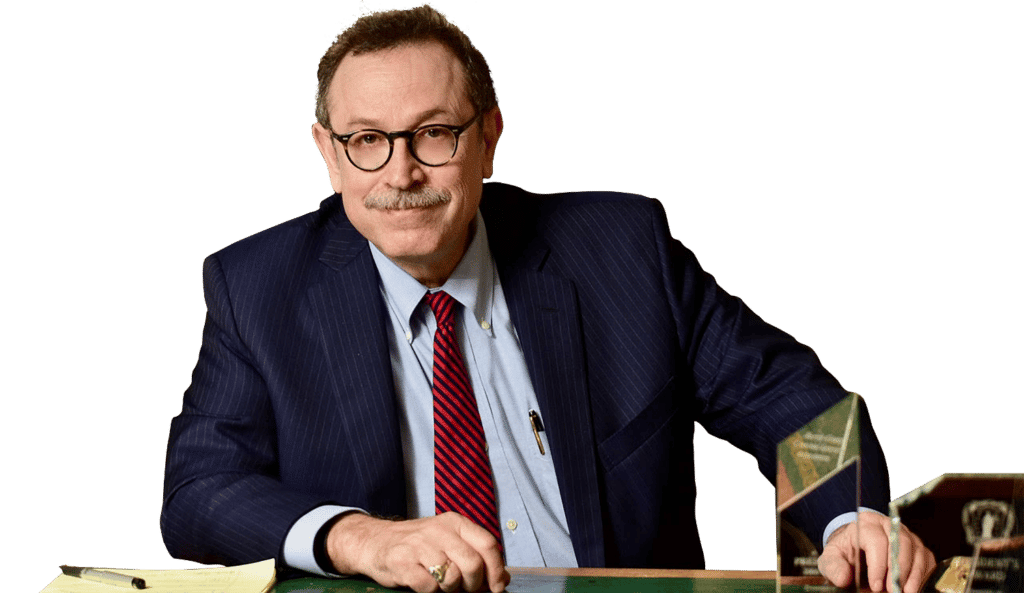
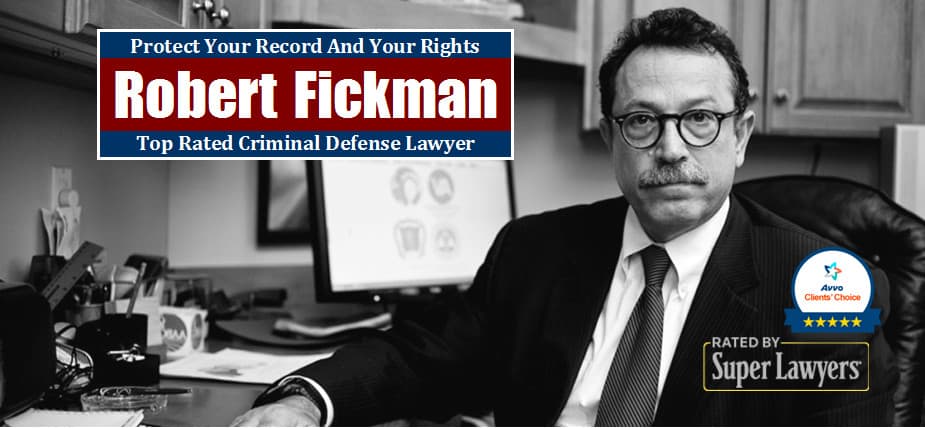
Houston criminal defense lawyer Robert Fickman has defended clients in federal court for over 40 years. He has handled over 300 federal cases. He has stopped federal charges from being filed. He has gotten federal charges dismissed. He has tried and won federal jury trials and federal bench trials. His longest federal trial lasted nine weeks, and his client was acquitted on all charges. Houston criminal defense lawyer Robert Fickman has spent his entire career defending people. Robert Fickman is proud that during his career, he never prosecuted a single soul.
Here are some of my recent successful Federal case outcomes:
2019 Charge: Federal Kidnapping, (United States v. L.S.)
Result: Not Guilty
2019 Charge: Federal Theft of Public Money & Healthcare Fraud (United States v. S.N.)
Result: Probation, No Jail time
2018 Charge: Federal Income Tax Evasion, (United States v. T.J.)
Result: Probation, No Jail time
2018 Charge: Federal Terroristic Threat, (United States v. J.M.)
Result: Stopped charges from being Filed
2017 Charge: Federal Bankruptcy Fraud, (United States v. D.R.)
Result: Probation, No Jail time
2017 Charge: Impersonating a Federal Agent, (United States v. T.L.)
Result: Stopped Charges from being Filed
2014 Charges: Drug Conspiracy & Possession of a Firearm by Illegal Alien, (United States v. A.R.F.)
Result: All charges Dismissed
Bank Fraud Defense Lawyer Robert Fickman will fight for you
Bank Fraud is a crime under Federal Law. The Offense is found in 18 United States Code Section 1344. This section provides as follows:
Whoever knowingly executes, or attempts to execute, a scheme or artifice—
(1) to defraud a financial institution; or
(2) to obtain any of the moneys, funds, credits, assets, securities, or other property owned by, or under the custody or control of, a financial institution, by means of false or fraudulent pretenses, representations, or promises:
shall be fined not more than $1,000,000 or imprisoned not more than 30 years, or both.
If you or a loved one are charged with Federal Bank Fraud and want an experienced federal criminal defense lawyer who will fight for you and your family, contact Houston criminal defense lawyer Robert Fickman today. Schedule an appointment today with Houston criminal defense Lawyer Robert Fickman. Call him at 713-655-7400.
A SUMMARY OF CRIMINAL DEFENSE ATTORNEY ROBERT FICKMAN’S CREDENTIALS
- Robert Fickman has been a criminal defense attorney in Houston for 40+ Years.
- Robert Fickman has handled over 300 Federal Cases.
- Robert Fickman has kept some clients from being charged in Federal Court.
- Robert Fickman has obtained the dismissal of some Federal Charges.
- Robert Fickman has gone to trial in Federal Court and obtained acquittals on all charges for some clients. In 2022, Robert Fickman went to trial in United States v. Rebolledo. Robert Fickman’s client was the ONLY client in the entire case to be acquitted on all charges.
- Robert Fickman has argued many cases before the Fifth Circuit Court of Appeals.
- Robert Fickman has had an AV Rating (the highest rating) with Martindale Hubbell for over 20 years.
- Robert Fickman has been named a “Texas Super Lawyer” since 2015.
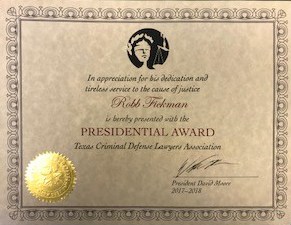
- Robert Fickman is well-respected by his peers, and he has received numerous awards.
- Robert Fickman was the President of the Harris County Criminal Lawyers Association (HCCLA) from 2006-2007.
- Robert Fickman is a past Texas Criminal Defense Lawyers Association (TCDLA) board member.
- Robert Fickman serves on the HCCLA and TCDLA Strike Forces, where he is called upon to come to the aid of other criminal defense lawyers.
- Robert Fickman is an outstanding public speaker. Robert Fickman was on the National Association of Criminal Defense Lawyers’ “Best of 2010 Speakers”, “Best of 2014 Speakers,” and “Best of 2022 Speakers Disc.”
- Robert Fickman was named “Mr. Declaration of Independence.” in the Texas State Bar Journal for his volunteerism.