Houston DWI Defense Lawyer
A DWI arrest in Texas can affect your driver’s license, your criminal record, your job, your reputation, and your future. For many people, it is their first experience with the criminal justice system. For others, a repeat DWI, felony DWI, intoxication assault, or intoxication manslaughter allegation can create the risk of jail, prison, license suspension, and long-term consequences.
Robert J. Fickman Criminal Defense represents people charged with DWI and alcohol-related state criminal offenses in Houston and throughout Harris County. With more than 40 years of criminal defense experience, Houston criminal defense lawyer Robert J. Fickman understands that a DWI case is not just about a breath or blood test. It is about the stop, the arrest, the officer’s observations, the field sobriety tests, the testing process, the video, the paperwork, and whether the State can prove every element of the charge beyond a reasonable doubt.
If you have been arrested for DWI, you should speak with a defense lawyer as soon as possible. Your criminal case and your driver’s license case may move on separate tracks, and important deadlines can arrive quickly.
What the State Must Prove in a Texas DWI Case
Under Texas Penal Code Chapter 49, a person commits DWI if the person is intoxicated while operating a motor vehicle in a public place. A first-offense DWI is generally a Class B misdemeanor, but certain facts can increase the seriousness of the charge, including a blood alcohol concentration of 0.15 or higher, an open container, a child passenger, prior DWI convictions, injury, or death.
That means a DWI case is not automatically proven because an officer made an arrest. The prosecution must prove the legal elements of the charge. Depending on the facts, the defense may examine:
- Whether the officer had reasonable suspicion to stop the vehicle.
- Whether the officer had probable cause to arrest.
- Whether the State can prove the person was operating a motor vehicle.
- Whether the location qualifies as a public place.
- Whether the State can prove intoxication at the time of driving.
- Whether field sobriety tests were administered properly.
- Whether breath or blood testing was reliable.
- Whether the officer’s report matches the video evidence.
- Whether constitutional rights were violated.
A strong DWI defense begins with a careful investigation of what actually happened, not just what the police report says happened.
The Traffic Stop Matters
Many DWI cases begin with a traffic stop. The officer may claim the driver was speeding, drifting, failing to signal, running a red light, committing a lane violation, or driving in a way that suggested impairment.
But the officer’s reason for the stop must be reviewed carefully. Dash camera video, body camera video, witness accounts, road conditions, lighting, traffic patterns, and the officer’s own report may all matter. If the stop was not legally justified, evidence gathered after the stop may be challenged.
Robert Fickman has defended DWI cases by investigating the arrest scene, comparing the officer’s account to the physical evidence, and testing whether the officer’s testimony holds up under scrutiny. Small details can matter. The location of a traffic sign, the condition of a road, the position of a vehicle, or what the video actually shows can affect the defense strategy.
For more background on what officers look for during a DWI investigation, see Robert J. Fickman’s article on what happens at a DWI stop.
Probable Cause for the DWI Arrest
Even if the traffic stop was lawful, the officer still needed probable cause to make a DWI arrest. Probable cause may be based on observations such as the smell of alcohol, bloodshot eyes, slurred speech, balance issues, admissions about drinking, field sobriety test performance, or other facts.
Those observations are not always as clear as they sound in a police report. Fatigue, medical conditions, nervousness, injuries, allergies, weather, footwear, uneven pavement, poor lighting, and confusing instructions can all affect how a person appears during a DWI investigation.
A defense lawyer can review whether the officer rushed to judgment, ignored innocent explanations, failed to follow proper procedures, or overstated what happened during the roadside investigation.
Challenging Field Sobriety Tests
Field sobriety tests are often used by police to support a DWI arrest, but they are not perfect. These tests depend on instructions, conditions, officer training, and subjective interpretation.
Common issues include:
- The person was tired, nervous, injured, or medically affected.
- The testing surface was uneven or unsafe.
- The officer gave unclear or incomplete instructions.
- Weather, lighting, traffic, or distractions affected performance.
- The officer failed to properly demonstrate the test.
- The video does not support the officer’s written conclusions.
- The person’s performance was better than the report suggests.
A DWI arrest report may make field sobriety testing sound simple and conclusive. A closer review may show a very different picture.
Breath and Blood Tests Are Not the Whole Case
Many people assume a breath or blood test makes a DWI case impossible to fight. That is not true. Testing evidence must still be reliable, properly collected and handled, and linked to the time of driving.
A breath or blood result may raise important questions:
- Was the test administered correctly?
- Was the machine working properly?
- Was the blood draw performed according to proper procedures?
- Was the sample stored and handled correctly?
- Was there a chain-of-custody issue?
- Did the test reflect the person’s alcohol concentration at the time of driving?
- Could medication, medical conditions, timing, or testing error affect the result?
In some DWI cases, expert witnesses may be useful to address breath testing, blood testing, alcohol absorption, alcohol elimination, toxicology, or whether the test result actually proves intoxication at the time the person was operating the vehicle.
Protecting Your Driver’s License After a DWI Arrest
A Texas DWI arrest can trigger both a criminal case and an Administrative License Revocation proceeding. The Texas Department of Public Safety Administrative License Revocation Program is a civil administrative process that is separate from the criminal court case.
In many DWI and BWI cases, DPS states that a driver may have 15 days from service of the suspension notice to request a hearing. If the hearing request is made late, DPS states that the request will be denied and the suspension will take effect on the 40th day after the driver is served notice.
That deadline matters. If you wait too long, you may lose the opportunity to contest the administrative suspension.
An ALR hearing may also give the defense an early opportunity to question the arresting officer, review the basis for the stop and arrest, and obtain information that may help the criminal defense.
First-Time DWI Charges in Houston
A first DWI charge is still serious. A conviction can result in fines, probation, license issues, insurance problems, court-ordered classes, ignition interlock requirements, and a permanent criminal record.
For many clients, the goal is to avoid a conviction if possible, protect their license, and minimize the damage to their future. Depending on the facts, the defense may focus on challenging the stop, challenging probable cause, disputing intoxication, negotiating a favorable resolution, or preparing the case for trial.
A first arrest does not mean the case should be treated casually. Early decisions can affect the outcome.
Repeat and Felony DWI Charges
Repeat DWI charges carry more serious consequences. Texas law enhances certain intoxication offenses based on prior convictions, and a DWI may become a felony in some situations, including cases involving prior DWI convictions, a child passenger, serious bodily injury, or death.
Felony DWI cases require immediate attention. The defense may need to examine prior conviction records, enhancement allegations, blood or breath test results, officer conduct, accident evidence, medical records, and the State’s ability to prove every required element.
Robert J. Fickman Criminal Defense also represents clients in serious alcohol-related cases, including intoxication assault and intoxication manslaughter allegations.
How Robert J. Fickman Builds a DWI Defense
A strong DWI defense is built through investigation. Robert Fickman’s approach is to examine the case from the ground up, including the arrest location, the officer’s stated reasons for the stop, the video evidence, the field sobriety testing, the breath or blood evidence, and the State’s ability to prove intoxication.
The defense may include:
- Reviewing dash camera and body camera footage.
- Visiting or documenting the arrest scene.
- Interviewing witnesses.
- Reviewing police reports and officer notes.
- Examining field sobriety test procedures.
- Reviewing breath or blood testing records.
- Investigating medical or physical explanations.
- Evaluating whether expert testimony is needed.
- Challenging constitutional violations.
- Preparing for negotiation or trial.
In a DWI case, details matter. The State has the burden of proof. The defense should not assume the police report tells the full story.
Talk to a Houston DWI Defense Lawyer
If you have been arrested for DWI in Houston, do not wait to protect your rights. You may have a limited time to contest a driver’s license suspension, and the criminal case can begin moving quickly.
Robert J. Fickman Criminal Defense represents people charged with DWI, repeat DWI, felony DWI, intoxication assault, intoxication manslaughter, and other state criminal offenses in Houston and throughout Texas.
To discuss your case confidentially, contact Robert J. Fickman Criminal Defense today.
Frequently Asked Questions About DWI Defense in Houston
What should I do after a DWI arrest in Houston?
After a DWI arrest, you should avoid discussing the case with police or prosecutors without a lawyer, preserve any paperwork you received, write down what you remember, and contact a DWI defense lawyer as soon as possible. Your criminal case and driver’s license case may have separate deadlines.
Can a first DWI charge in Texas be fought?
Yes. A first DWI charge can still be challenged. The defense may examine the traffic stop, probable cause for arrest, field sobriety testing, breath or blood testing, officer video, and whether the State can prove intoxication at the time of driving.
How long do I have to request an ALR hearing after a Texas DWI arrest?
In many DWI and BWI cases, Texas DPS states that a driver has 15 days from service of the suspension notice to request an Administrative License Revocation hearing. Because deadlines can depend on the notice and the facts of the case, you should speak with a lawyer immediately after arrest.
Does a breath or blood test mean my DWI case is over?
No. Breath and blood tests can be challenged when there are issues with testing procedures, equipment, sample collection, chain of custody, timing, or whether the result actually proves intoxication at the time of driving.
When does a DWI become a felony in Texas?
A DWI may become a felony in certain situations, including cases involving prior DWI convictions, a child passenger, serious bodily injury, or death. The exact charge depends on the facts, the person’s record, and the statute the State alleges applies.
A SUMMARY OF CRIMINAL DEFENSE ATTORNEY ROBERT FICKMAN’S CREDENTIALS
- Robert Fickman has been a criminal defense attorney in Houston for 40+ Years.
- Robert Fickman has handled and won many cases in State and Federal Court.
- Robert Fickman has argued many cases before the Fifth Circuit Court of Appeals.
- Robert Fickman has had an AV Rating (the highest rating) with Martindale Hubbell for over 20 years.
- Robert Fickman has been named a “Texas Super Lawyer” since 2015.
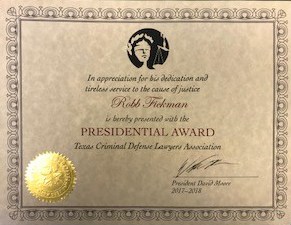
- Robert Fickman is well-respected by his peers and has received numerous awards.
- Robert Fickman was the President of the Harris County Criminal Lawyers Association (HCCLA) from 2006-2007.
- Robert Fickman is a past Board Member of the Texas Criminal Defense Lawyers Association (TCDLA).
- Robert Fickman serves on the HCCLA and TCDLA Strike Forces, where he is called upon to come to the aid of other criminal defense lawyers.
- Robert Fickman is an outstanding public speaker. Robert Fickman was on the National Association of Criminal Defense Lawyers “Best of 2010 Speakers,” “Best of 2014 “Speakers Disk,” and “Best of 2022 Speakers.”
- Robert Fickman was named “Mr. Declaration of Independence.” in the Texas State Bar Journal for his volunteerism.