Being accused of a sex crime in Houston, Texas, is overwhelming. You’re facing more than just legal trouble. Your reputation, your freedom, and your future are all at risk. Texas reported 15,097 forcible rape cases in 2023, more than any other state in the country. Yet law enforcement cleared only 18% of those cases.
On the federal side, over 1,000 people were sentenced for sexual abuse offenses in just one year. These cases are aggressively prosecuted and come with severe, life-altering penalties.
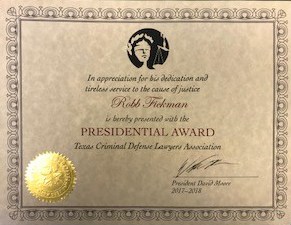
Robert J. Fickman Criminal Defense has been defending people in the most challenging criminal cases for over 40 years. If your future is on the line, speak to Houston criminal defense attorney Robert Fickman and start building your defense today.
What Qualifies as a Sex Crime in Texas?
Sexual Assault
Under Texas Penal Code § 22.011, sexual assault includes any non-consensual sexual activity involving penetration. This could mean physical force, threats, coercion, or cases where the alleged victim is unconscious or otherwise unable to give consent. Even if there’s no violence involved, if consent wasn’t clearly and freely given, prosecutors may file charges.
Aggravated Sexual Assault
Aggravated sexual assault is defined in Texas Penal Code § 22.021 and carries even harsher penalties. The charge becomes “aggravated” when certain factors are involved—like the use of a weapon, threats of serious bodily injury or death, or if the alleged victim is under 14, elderly, or disabled. This is a first-degree felony and can result in a life sentence.
Indecency with a Child
This charge comes from Texas Penal Code § 21.11. It covers two scenarios: sexual contact with a minor under 17 or exposing oneself to a minor with the intent to arouse or gratify. Even touching over clothing can lead to an arrest. This charge is frequently filed in State court. Attorney Robert Fickman has successfully defended many people accused of this offense. Stepfathers, school teachers, and counselors are all susceptible to being falsely accused of this offense.
Online Solicitation of a Minor
According to Texas Penal Code § 33.021, using text messages, social media, or any other electronic communication to solicit sexual conduct from someone under 17 is a felony. Even if a meeting never takes place or the person on the other end is actually a police officer pretending to be a minor, the communication itself can still lead to serious charges. That’s part of why sting operations are so common in these cases.
Possession or Distribution of Child Pornography
Possessing, sharing, or producing sexually explicit material involving minors is a felony under Texas Penal Code § 43.26. That includes digital files on phones, cloud storage, or even peer-to-peer file-sharing networks. The law doesn’t require that you create the material – just having it is enough. And the more files prosecutors find, the more charges they can stack. When a client has a larger amount of this illegal material, the charges are typically filed in Federal Court, where sentencing is much harsher.
Public Lewdness & Indecent Exposure
These are lower-level offenses, but they still carry serious consequences.
- Public Lewdness is defined under Texas Penal Code § 21.07 and involves engaging in sexual acts in public or in places where others are likely to be offended.
- Indecent Exposure is covered in § 21.08 and refers to exposing one’s genitals with the intent to arouse or gratify, knowing someone else might see.
Prostitution and Solicitation
Prostitution is charged under Texas Penal Code § 43.02, and solicitation of prostitution under § 43.021. Both the person offering and the person paying for sexual services can be arrested.

When Does a Sex Crime Become a Federal Case?
Use of the Internet or Technology
The moment a crime involves email, text messages, or any online communication across state lines – it becomes a federal issue. Federal agencies like the FBI and Homeland Security take over investigations that involve the Internet, especially when it comes to child exploitation or pornography. Oftentimes task forces, made up of local and federal law enforcement will work together to investigate more complex federal offenses. Charges that result from these investigations are almost always filed in Federal Court.
Crossing State or International Borders
If someone is accused of traveling for the purpose of illegal sexual conduct or if the alleged victim was transported across state lines or international borders—federal law kicks in. This includes cases involving sex trafficking or arrangements made through travel for unlawful sexual activity.
Crimes Involving Federal Property or Employees
If the alleged offense takes place on federal land (like military bases or national parks) or involves a federal employee, federal courts have jurisdiction.
Common Federal Sex Crime Charges
Child Pornography (Production, Possession, Advertising Distribution)
Federal law punishes possession, sharing, advertising or producing child pornography far more severely than state law. The sentences are long, and there is no parole in the federal system. Simply storing images on a cloud drive or sharing files online can result in multiple charges.
Sex Trafficking and Exploitation
Human trafficking charges arise when someone is accused of recruiting, transporting, or harboring individuals—especially minors—for commercial sexual activity. These cases often involve lengthy investigations and sting operations.
Enticement of a Minor
If someone uses the internet or other forms of communication to try to persuade, lure, or entice a minor into sexual activity, that’s a federal offense—even if the meeting never occurs or if the minor is actually an undercover agent.
Sex Tourism
This refers to traveling outside the U.S. to engage in illegal sexual conduct with minors or others who are unable to consent. U.S. citizens can be prosecuted for conduct abroad under federal law.

Key Differences Between State and Federal Charges
Agencies Involved
Local police or sheriff’s departments usually investigate state sex crimes. Federal cases involve Federal agencies like the FBI or Homeland Security, which means greater resources and often longer investigations before charges are filed.
Court Systems
Texas state courts and U.S. District Courts operate differently. Federal courts follow their own procedures, and judges often have less discretion when it comes to sentencing. If you are facing federal charges, expect more rigid timelines. It is very uncommon for clients charged with sex offenses in Federal court to receive probation.
Sentencing Guidelines
Federal sentencing is governed by guidelines and statutes that often include mandatory minimum sentences. In Texas state court, judges and juries typically have more discretion—though penalties are still steep. For example, a federal child pornography conviction can carry a minimum of 15 years, while the same charge in state court may allow for less, depending on the facts.
Pretrial Detention and Bond
Getting out on bond is generally easier in state cases. Federal defendants often face detention hearings where prosecutors argue that release would pose a risk to the community or a risk of flight. If a judge agrees, the accused may be held until trial.
These differences matter. Someone charged with the same conduct in state court might have access to probation or alternative sentencing, while a federal case could lead to mandatory years in prison.
Penalties and Long-Term Consequences
Prison Time
Under Texas law, most sex crimes are charged as felonies with severe prison sentences. For example, sexual assault is typically a second-degree felony, punishable by 2 to 20 years in prison. Aggravated sexual assault is a first-degree felony, carrying 5 to 99 years or life. Some offenses, like those involving children or repeat offenders, include mandatory minimums and restrictions on parole eligibility.
In Texas, there’s also continuous sexual abuse of a child, which carries a minimum sentence of 25 years without the possibility of parole. For many, that’s a life sentence in all but name.
Sex Offender Registration
One of the most damaging and lasting consequences is mandatory registration on the Texas sex offender registry. This is governed by Chapter 62 of the Texas Code of Criminal Procedure and enforced by the Texas Department of Public Safety (DPS). The registry is public and displays the offender’s name, address, photo, and offense details.
Some offenses require lifetime registration, while others allow for removal after a minimum period—usually 10 years after completion of sentence, parole, or supervision. While registered, you may face strict limits on:
- Where you can live (often must stay a certain distance from schools, parks, and daycares)
- Which jobs you can work
- Access to technology or social media
- Who you can live with
- Mandatory in-person check-ins with law enforcement
Employment and Housing
A sex crime conviction on your record triggers automatic red flags during background checks. Most employers won’t consider applicants with these convictions—especially in education, healthcare, or positions involving children. Housing is just as difficult. Landlords regularly reject registered sex offenders, particularly in major cities like Houston, where housing applications are competitive.
Loss of Custody or Parental Rights
Sex crime convictions heavily influence custody decisions in Texas family courts. A parent convicted of a sexually violent offense—especially involving a child—may lose custody, visitation rights, or even face termination of parental rights under Texas Family Code § 161.001. Supervised visits may be allowed in some cases, but unrestricted contact is rarely granted.
Immigration Consequences
For non-citizens, a sex crime conviction often means more than prison time. Under federal immigration law, many Texas sex offenses—particularly those involving minors—qualify as aggravated felonies or crimes of moral turpitude. That can lead to mandatory deportation, denial of reentry, or permanent bar from gaining lawful status.
The Department of Homeland Security and immigration judges view these offenses with zero tolerance. Even deferred adjudication or probation can trigger removal proceedings.
Defenses Against Sex Crime Charges
Consent
In adult sexual assault cases, consent is often a central issue. Sexual activity without consent is illegal. But proving that consent was present—or not—can be complex.
If both parties were legally capable of consenting and no force or coercion was involved, consent can be a complete defense. In Texas, the law is clear that someone must freely and voluntarily agree to participate in sexual activity. But the law also defines when consent is not valid—for example, if the alleged victim was unconscious, intoxicated, mentally incapacitated, or under duress.
If the other person is a minor, consent is irrelevant as a defense. Under Texas Penal Code 43.25, Sexual Performance by a child, a person under 18 cannot legally give consent to sexual activity with an adult, regardless of the circumstances. It is a common misconception that the age of consent is 17. This statute raises the age of consent to 18.

False Allegations
False accusations are more common than many people realize, particularly during custody disputes, divorces, or personal vendettas. In both state and federal courtrooms, witness testimony plays a significant role. A strong defense strategy includes thoroughly investigating the credibility of the accuser.
This may involve pointing out inconsistencies in statements, highlighting motives for fabrication, or presenting third-party witnesses who contradict the allegations. In some cases, text messages, social media records, or past behavior can show that the accusations don’t align with the facts. A criminal defense lawyer may also bring in forensic psychologists to examine the behavior of the accuser and whether it matches known patterns of truth or deception. The relationships between all relevant parties are key to developing a theory as to why a child might be lying.
Mistaken Identity
Sex crime cases involving strangers—especially those stemming from online interactions—can turn on a single detail: the identity of the accused. When the alleged victim didn’t know the person, or when the interaction happened digitally, mistaken identity becomes a powerful defense.
In both Texas and federal courts, digital forensics can play a major role. IP addresses, login history, timestamps, GPS data, and surveillance footage can all be used to show that the defendant wasn’t where the prosecution claims they were. Sometimes, someone else may have used the accused’s account, device, or internet connection. Without a clear link between the defendant and the alleged offense, the state may struggle to prove guilt beyond a reasonable doubt.
Entrapment
Entrapment is a defense that sometimes applies in federal sex crime cases, especially those involving sting operations. Undercover agents, usually posing as minors online, may attempt to catch individuals who are seeking illegal sexual encounters. But not every operation is legally sound.
If law enforcement initiates the idea, pushes for illegal behavior, or pressures someone into actions they wouldn’t normally take, the entrapment defense may apply. The standard isn’t whether the person took the bait but whether they were predisposed to commit the crime. Courts look at the conduct of both the defendant and the agents involved.
Lack of Evidence
Many sex crime cases are based solely on one person’s word against another’s. If there’s no physical evidence – no DNA, no digital messages, no surveillance footage, then Robert J. Fickman Criminal Defense can argue that the prosecution hasn’t met the standard of proof beyond a reasonable doubt.
This is important in older allegations or those involving delayed reporting. Memories fade, evidence disappears, and witnesses become unavailable. Without corroborating proof, a skilled defense can focus on raising doubts about the state’s version of events.
Whether in state or federal court, juries are instructed not to convict unless they are convinced beyond a reasonable doubt. If there are gaps in the investigation, missing evidence, or conflicting testimony, that may be all it takes to tip the balance.

Start Building Your Defense with Houston, TX Criminal Defense Attorney Robert Fickman Today
When you’re up against a state or federal sex crime charge, the stakes couldn’t be higher. Whether it started with a knock on the door, a call from a detective, or something that got out of control fast, you’re now facing something that could change your life forever.
This guide is here to explain the law in real terms. But when it comes to protecting your freedom, what you really need is someone who’s ready to fight for you.
That’s what Robert J. Fickman Criminal Defense does. He has been in the trenches for decades, pushing back against aggressive prosecutors and securing successful results for clients across Texas. He can help with the following:
- Building a strong, strategic defense tailored to your unique case
- Protecting your rights from the moment of investigation through trial
- Challenging unreliable witness statements, digital evidence, and police tactics
- Representing you confidently in courtrooms across Texas
- Navigating the system to reduce charges, avoid registration, or even get cases dismissed
- Offering clear, honest advice at every step
Houston criminal defense lawyers at Robert J. Fickman is available to help from the moment the investigation begins. Do not wait until you are charged. Call Robert Fickman at (713) 655-7400 or send a secure message through our online form. We’ll handle the rest.
Related